 (814) 904-6122
 When an oil or gas well reaches the end of its productive life, the work isn't over. It is entering its most consequential phase. Left unaddressed, abandoned wellbores don't just sit idle. They leak. What they release into the air, groundwater, and surrounding communities carries real consequences for public health, environmental stewardship, and regulatory compliance.
Methane is the primary concern. Experts estimate methane is 25 to 84 times more potent than carbon dioxide as a greenhouse gas, and orphaned wells are among its most persistent and underreported sources. Current estimates from the EPA show approximately 3.7 million abandoned and orphaned oil and gas wells across the United States, many actively emitting without measurement, monitoring, or a clear plug-and-abandonment path.
That gap between what's leaking and what's being tracked is where the real risk lives. You can't manage what you haven't measured.
Why Methane Quantification Matters Before You Plug
Plug and abandonment is a precise operation. The seal's integrity depends on understanding what you're working with before placing the first cement plug—formation pressures, gas migration pathways, and the condition of existing wellbore infrastructure. Methane quantification adds a critical layer to that picture.
Pre-plugging measurement establishes a baseline: how much methane is escaping, from where, and at what rate. This data informs plug placement decisions, helps prioritize wells within a larger program, and creates a verifiable record for regulatory reporting and offset documentation. Post-plugging measurement confirms what the work achieved, providing the accountability operators, regulators, and environmental stakeholders increasingly expect.
Without before-and-after data, you're plugging blind and reporting on faith. The consequences of skipping that step are real. Operators who proceed without proper quantification risk failing regulatory audits, cannot substantiate methane reduction claims, and face disqualification from carbon offset programs that depend on verified emissions data. When a seal fails years later, and there is no pre-plug baseline on record, the liability falls squarely on the operator, not the contractor who moved too fast.
How Plants & Goodwin Approaches Methane Quantification
Since 2023, Plants & Goodwin is a part of Zefiro Methane Corp. This acquisition combined Zefiro's expertise in methane quantification and emissions reduction with Plants & Goodwin's decades of plug and abandonment experience throughout the United States, particularly in the Appalachian Basin. The goal was to build a fully integrated company that plugs wells, measures leaks before and after work and creates a verifiable record of emissions impact. Plants & Goodwin's field operations provide the operational backbone. Zefiro's measurement methodology and proprietary technology provide the accountability layer operators and regulators increasingly require.
That partnership has already produced results in the field. Between October 2025 and April 2026, Zefiro completed pre-plugging methane quantification readings for 849 wells across West Virginia, including sites in rugged, difficult-to-access mountain terrain.
Critically, Zefiro utilized a proprietary, patent-pending wellhead containment solution to stabilize the environment around each wellhead and ensure accurate emissions readings—the kind of technical specificity that makes the data defensible for regulatory reporting and carbon offset origination. Post-plugging readings are also planned under the same contract, providing the before-and-after record that operators and regulators increasingly require.
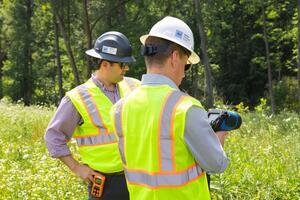
Today, Plants & Goodwin has a full-time manager dedicated exclusively to methane quantification, supported by a team of field workers who bring hands-on rig experience to pre- and post-plugging measurement across active project sites. This integrated approach is a core part of how P&G delivers responsible well closure.
That integration matters. When the same contractor handles both quantification and plugging operations, the data flows directly into execution decisions. There's no translation layer between what the measurement team found and what the field crew does next. The result is a tighter, more accountable process and a more defensible outcome for everyone involved.
Responsible Closure Starts With Knowing What You Have
The push to plug more wells faster is real. Federal funding through the Infrastructure Investment and Jobs Act has accelerated timelines, and operators and state agencies alike are working through significant backlogs. But speed without measurement creates a different kind of liability. One that surfaces years later in the form of failed seals, unverified emissions, and regulatory exposure.
Quantifying methane before and after plugging is not just good environmental practice. It is how you demonstrate that the work was done right, document the impact it had, and build the kind of record that protects your organization long after the crew has left the site.
Plants & Goodwin is built to do both: close the well and account for what was closed. That commitment to environmental stewardship, backed by verified data and integrated field operations, is what responsible well closure looks like. Contact us to discuss how our approach to methane quantification and plug and abandonment can support your next project.
Sources:
https://insideclimatenews.org/news/10052026/well-done-foundation-plugging-abandoned-oil-gas-wells/
https://www.edf.org/climate/methane-crucial-opportunity-climate-fight